 |
| You thought I was kidding about the talking in to the mouse thing. huh? |
Wednesday, July 23, 2014
Listening to Yourself Talk is Mildly Horrify- also known as Kate Makes a Podcast (Or Week 5 continued)
As a mid-term assessment of sorts, I was asked to make a podcast. It was horrible yet wonderful at the same time, and I encourage everyone who likes to talk, like myself, to make one themselves!

We are Living in a Digital World and I am a Digital Girl...Or Digital Darwinism (Or Week 5)
For those of you who aren't in my Edu 533 class this term, and are reading this blog (sooooo, all maybe 5 of you, and that is being generous, I am sure), this week we watched two fairly long documentaries on growing up and living in a digital world: Generation Like and Digital Nation. I instantly started thinking this should have been a Boy Meets World episode in the 90s.
 |
| Corey and Topanga FOREVER! |
But, I digress....after watching the documentaries, I now have to answer some questions; seven, if you want to get technical. So, here I go, off to the races....once I look through a few more Boy Meets World gifs!
1. Compare and Contrast each documentary. What was similar or different from the first one Digital Nation filmed in 2010 to Generation Like filmed in 2014 ?
Both documentaries addressed technology, but I feel like even in the last three years, the concerns over technology have changed. They both had these undertones of negativity. They were not talking about positives as much as I feel they should have. What about the progress that technology brings? And they talked a lot about over-stimulation due to the digital age. But, I just don't see what is inherently wrong with teachers having to work harder to engage their students. That is a minimum in my mind. You work to engage them. Sometimes it is hard, sure. But, you still have to do it.
2. Your thoughts on multitasking. Do you agree? Can you multitask? Do you disagree with the video on the topic of multitasking? What do you think our students think about multitasking today?
I adamantly want to disagree with Digital Nation on the effectiveness of multi-tasking. I really do. But, I can't. I am the queen of multi-tasking. I do it all the time. I am doing it right now. In my mind, I am a pro. I accomplish everything with ease. But, in actuality, I know, I am just taking twice as long to do what I need to do. I think students think the same way I do, and I completely understand why. We feel like we could give lessons on multi-tasking. Stand on one foot, juggled our smart phones, and also write our blog posts with your toes? No problem; watch a master! Sadly, that is just not the case. I mean, I know I would think I was doing great, until I broke my cell phone screen, fell on my butt, and then finished my blog post six hours later after watching a few back episodes of True Blood. (I totally did not do that, by the way. I only watched one episode, not three). I don't think that the act of multi-tasking is "dumbing down" anyone though, as it was said in Digital Nation. I do think it is making life more of a challenge in some aspects, but, it isn't that they are not intelligent, they are just not making proper use of their time. It doesn't mean they are "dumb". I should also clarify: I despise that word. The second I heard it, I was instantly turned off from what was being said. Behold the power of word choice!
 |
| She knows what she is talking about: she is lounging, which means she did what she needed to do. |
3. Is there an addiction happening in society today with technology or is it just a new way of living? Should we be concerned?
I think it is both. I think some people have addictive personalities, and take things too far. It is the way life is unfortunately. People can't set limits for themselves sometimes. Technology is being integrated into our lives, and it is replacing many things. Does it create a disconnect sometimes? Most definitely yes. In Digital Nations, it mentions a family, "all in the same house, but just in other worlds." But, there are things we have to work with in life, and making sure we spend time together is a trial sometimes. no matter what. It all comes down to digital citizenship to me. Set rules for yourself and your children. Try your hardest to adhere to them. Find out what works for you and yours. It doesn't mean we should be crying from the rooftops that technology is addictive to everyone and we should start banning things. It just is not practical.
4. Do video games serve a purpose in education or are they a waste of time?
5. How did what you watched in the two videos support your feelings about technology or how did it change your views?
I think the videos broached some interesting subjects, especially about digital footprints and how we have become both the consumers and the promoters of goods. Part of me knew about the way my "liking" something was being used for this purpose. I mean, I would have to be blind to not notice the obviously "tailored" advertisements on Facebook. No Facebook, I am not looking for love, I am all set in that department. Thanks for your concern though. I will be sure to check out <insert dating site here>....never. I found some things extremely disturbing in both for different reasons. They were jarring, yet reaffirming at the same time.
I think the videos broached some interesting subjects, especially about digital footprints and how we have become both the consumers and the promoters of goods. Part of me knew about the way my "liking" something was being used for this purpose. I mean, I would have to be blind to not notice the obviously "tailored" advertisements on Facebook. No Facebook, I am not looking for love, I am all set in that department. Thanks for your concern though. I will be sure to check out <insert dating site here>....never. I found some things extremely disturbing in both for different reasons. They were jarring, yet reaffirming at the same time.
6. Are kids and adults today ruining their digital footprints by sharing too much information online without realizing that it may be detrimental to their future? Should they care? Are they focused on too much of what others think?
I think people have been ruining their digital footprint in certain ways. Teenagers especially just post whatever they want, because hey, they are in high school, who care anyways? Right? But, these things persist past high school. When something is put online it is never truly gone. Sometimes people don't realize what they are posting about is going to affect them. I have done somethings I should not have. Probably said a curse word or two that might reflect poorly on me. I usually just say it is me, and who cares what other's think? But, in reality, what you say on the Internet can haunt you later in your professional career or just in interactions with other. But, this is all about digital citizenship. It is part of why we learn to use technology. And everyone makes mistakes in life. It is about growing as a person, and the same pertains with your digital identity.
7. What do you feel are the dangers of technology use? Are there any?
There are dangers with everything. It is dangerous when I drive my care, when I walk into a building, when I go for a walk on the beach. Technology has it's own. There are predators: you are interacting with human beings, just like in the physical world. People are not always good. It is a sad but all to real truth. Technology can enable us. It can cause us to rely on it instead of ourselves or each other. I am persistently guilty of using my GPS....ALL THE TIME. It is like a crutch. It keeps me from learning sometimes. I know this, so, occasionally, I force myself to put it down and just follow my instincts.
Not only is freeing myself from technology refreshing, but, it liberating. Sometimes, it just feels good to put the smart phone down, and appreciate the things around us. We as a society need to make sure we find that balance: as a whole and individually. The documentaries were interesting to me, and they opened up new ideas and concepts for me. Occasionally I felt frustrated, but, overall, I think it is something worth viewing- regardless of your technological savvy.
Tuesday, July 22, 2014
"In the Age of Wonder": Musings on Digital Citizenship.....(Or Week 4 Assignment)
Technology is everywhere. It saturates our lives these days. I personally use it for everything. Even as I sit here writing this, I am listening to music stream from WAAF, talking to friends from around the world, and researching what I want to say. Yet, for all of my time spent on the Internet and utilizing technology, I had never really thought about digital citizenship until this moment. It was a concept I was aware of, but, I have never thought about it. I had definitely never heard about the Nine Elements of Digital Citizenship. Honestly, it made me think of Internet mystics, a la The Dark Crystal.
Yet, the concepts of digital citizenship all make sense, and should be something we address as a society all the time. But, some people still wonder, why should we address it like this? Who should teach children about this? When should it be introduced as a concept? MIND EXPLOSION! I am just going to answer each one using one of my favorite things in the world: a list!
 |
| "In the age of wonder" |
- When should digital citizenship be introduced as a concept?
I think with the way we as a society use technology makes this question almost too easy to answer. Digital citizenship is necessary at an early age. I see my godsons playing their Wii or unlocking a smart phone to play Angry Birds at the ages or four and five. They need to be taught to respect technology and to respect those around them while using technology. Their roles as digital citizens evolve with age, and so will the things they will learn. But, it needs to start early, and the concepts need to be introduced.
 |
| I am just moved on to the smart phone |
- Who should teach children about this?
It is a group effort. It is just like any other aspect of raising a child. Things are adapting in our world, and so are what is required in a child's upbringing. It isn't just a teacher's job to ensure children learn about technology and how to use the Internet respectfully. It has to be enforced at home as well. To be a good digital citizen, it requires so much more than learning to use a computer and how to cite work.
- Why should we make such a big deal of addressing digital citizenship?
"This vast landscape of resources is offered digitally (more and more), freely (often), and equitably (hopefully), but to take that cerebral trek through the online world, children must know how to do it safely, securely, and responsibly. This used to mean limiting access to the internet, blocking websites, and layering rules upon rules hoping (vainly) that students would be discouraged from using an infinite and fascinating resource."
We can't stop them from using technology, and nor should we. But, we can teach them how to use it, and how to use it productively, safely, and respectfully. It can help them learn how to treat people with decency on the Internet, how to acknowledge other peoples' works, and just how to be a well-rounded citizen of the world. Also, maybe teach them that duckface selfies are just horrible....
 |
| The Duckface: the bane of the internet |
P.S.- Thanks Hussain for the whole banning libraries idea!
Monday, July 21, 2014
Blogging About Bloggers: Totally Meta (Or Week 3 Part 1 cause I am a little behind schedule)
For this week, I was assigned to read over some blogs and then reflect on three of them. While doing that, I discovered something: there are a lot of very boring educational blogs out there. I am not judging...much....because I am sure mine is guilty of the same thing. I did manage to make it through a few, enough to do this assignment, and some of them were not difficult. I occasionally would yell out, "Ooooh! I like this one!" At that point, I would know I had found a keeper! The below video pretty much sums up my reaction when I found each one....
But enough snobby reactions to other peoples' hard work! I chose three blogs to review and reflect on and I will just jump right in to it! The first blog I read was by Google Certified teacher Alice Barr. I read her post from March 19, 2014. I had to go so far back because most of her posts are just Diigo links, but I will get back to that later. This posting was about a personal development day that her school had.
"Take off your teacher hat and put on your learner beret. This is an opportunity to cross pollinate across learning areas and grade levels."
 |
| Buzzzzzzzzzzzzzzzzz |
The whole point of it was for teacher to spend time together and find cooperative and creative ways to solve simple problems. I loved how passionate Alice was about the whole thing, and I absolutely adored the above scripted phrase. It was just so endearing that is stuck out to me. Which was a stark contrast from the rest of the blog. As I mentioned, the majority of the blog was lists of useful links. Which, in all honesty, many of the links were very interesting and informative. But, it did not make for a very interesting reading experience. I did not feel like it let me know her personality well when it had no real input from her. But it did show me how blogs could be utilized as a way to just put useful information out for everyone to easily access, especially since not everyone uses Diigo!
The next blog I read was by Richard Byrne. I read quite a few posts by him, but I am going to talk about his posting from June 17, 2014. Richard wrote about Zaption, which is this fantastic program that allows you to create video quizzes for students to take: and it doesn't have to cost you as the educator a thing! Which is great! I really liked that he writes about how the technology can be applied specifically in the classroom. He does this in every blog post. Overall I found his blog very informative and easy to read. Not only that, but he does so in a way that shows his personality while still being professional. It is a perfect balance. This blog introduces me to great new ideas for integrating technology in the classroom and one easy, well-thought-out blog.
The last blog I read was actually not on the list, but it is the blogger who I am planning on reaching out to for my field hours, so, I figured I would address his blog! Nicholas Provenzano, a.k.a the Nerdy Teacher, is an pretty incredible. Read his blog, maybe read it twice if you have the time. I read basically every posting he had, but, I am going to specifically talk about his posting from April 21, 2014. He talks about moving away from bubble testing and other evaluations in favor of project-based assessments. As a wannabe Social Studies teacher, this whole concept screams "AWESOME" to me. Students can build their own assignment, and use any sort of outlet. And I can help them by introducing them to things to help them accomplish that project. I have never been a huge fan of tests as a for of assessment, so, this is fantastic!
Overall, I read tons of useful information about different technologies I can use in my own future classroom. I also learned some aspects of blogging that I want to use in my own blog. I also discovered how I want to demonstrate myself in my blog. I had been concerned about introducing too much of myself in my blog: making it too personal. But, I am seeing now that is just makes me more presentable and engaging.
P.S.- This is fantastic, and I know what I am doing on my first day of school! SoulPancake is the absolute best!
Tuesday, July 8, 2014
A Webquest, Huzzah! (Or Week 3 Part 2, cause I am a rebel and go out of order!)
 |
| You wouldn't want to slay this cutie though! |
 |
| Come to the Dark Side, we have ice cream! |
You are probably wondering what aspect of Ancient Greece I am thinking. It isn't even a question for me. I am going to do my webquest on Ancient Greek mythology and their "religion". The targeted audience will be Middle School students, if I pull it off correctly! I found quite a few great webquests on-line. Some of them too great because I want to use a LOT of stuff from them! My favorite, which is exactly how I would want to model mine, with a few tweeks, is found here! I love how the end result is to create their own god or goddess based off of modern-day concepts. I also strongly support the use of "games" in the classroom, and I LOVE trivia games, so, a group trivia-esque assessment seems wonderfully fun to me. In this webquest, I really liked one aspect she implements where the students have to find examples in modern-day life where Greek mythology is referenced. I like the idea of connecting their lives to the history in any way possible. I would also want to implement more of the cultural implications of the Greeks mythology, like how their gods directly influenced their lives, not just the stories behind them. I found this webquest with some great topics in the "Greek Religion" section.
I have all these ideas for a webquest, now I need to figure out exactly what technology I would want them to utilize to accomplish it. I like the idea of this being a group project, so I think teaching them to utilize Google Drive would be essential for it, and it is something they can use for any number of other classes. I am not honestly sure what other Web2.0 programs I would want them to use yet. I will have to keep thinking on that one!

Wednesday, July 2, 2014
A Classroom with No Walls (Or Week 2 Webinar)
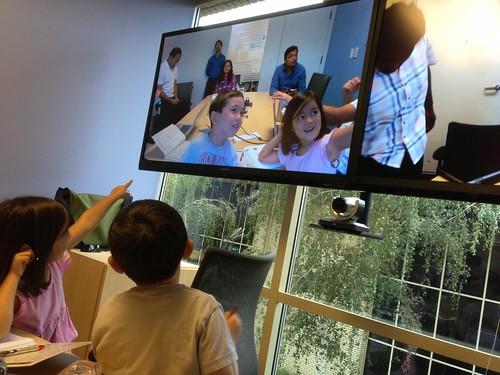
This week, I watched a webinar presented by Anne Mirtschin called "The World is My Classroom." (It might seem boring, but, she is from Hawthorne, Australia and her accent is fantastic, so that alone should be a draw to listen in on what she has to say!) I also provided a Youtube link of the webinar that was available. It might be a little easier to access if you so wish. I chose this webinar because it seemed like it would interest me the most. I love to explore the world, and this webinar seemed to present options to do that within my own classroom.
Anne Mirtschin is a secondary teacher who teaches Information Technology and Accounting. You can check out her personal website here! In this webinar, she describes using the program Skype to create a global classroom. As I listened to her talk, I found myself getting excited by the possibilities. Honestly, I am surprised this thought never occurred me before. Teachers are expanding their personal networks beyond continents. I can connect with a fellow teacher from the FUTURE....if they are in certain time zones! And more importantly, children can interact with their peers all the way across the world. I thought about these things as I watched slides tick by and felt like a small child who finds out they are going to Disney World!
The students in Anne Mirtschin's classroom used Skype calls to connect with classrooms across the globe, partly through the efforts of the Hello Little World Skypers. They would connect multiple times, creating relationships and answering each others' questions. It is not a foreign concept at all. People have been making video calls in business to connect with corporations on the other side of the world for years. Why not utilize that same technology in classrooms?
I am working to become a middle school Social Studies teacher. The idea of being able to talk to another teacher in say, Greece or Italy while teaching about the Ancient Romans or Ancient Greeks thrills me. To have a group of children on the other side of the world share their lives with my students by just clicking a little green telephone icon is amazing. With organizations like Hello Little World Skypers, I can create a whole different way of evaluating what they are learning and do assessments that span continents, all the while, engaging the students on a global scale with the use of digital media and technology!
 |
| Source |
In the webinar, Anne mentions how using Skype and global education can help expand my personal network across the world. That would allow me to learn about new research and keep up-to-date on professional literature to an even greater scale. A new educational tool emerges in Japan? Well, my PLN contact in Hiroshima has more information on it. The opportunities are endless!
 |
| Source |
I watched many MANY more webinars on this topic after this one because I found them fascinating. As a whole, I think the webinars are a great learning tool as an educator. I happened to love Anne Mirtshin's presentation, even if occasionally I had trouble understanding her, but, I could also easily see webinars being very dry and difficult to get through at times. I watched a recorded webinar, but I think it would have been more engaging had I been there for it "live." I then could have talked with the other educators taking part, and maybe even make more connections for my PLN.
For me as a Social Studies teacher, a global classroom means opening up doors for students. It means experiencing cultures other than their own. It means seeing a world outside their own town or country. Social Studies is about our past and our present and how they intertwine, and to truly know how things have changed, most people need to see it. And through a global classroom, the students, and even the educators, can experience it.
Subscribe to:
Comments (Atom)